

Views: 0 Author: Site Editor Publish Time: 2025-10-28 Origin: Site


Commercial lighting is a fundamental aspect of modern business environments. Whether in retail stores, offices, restaurants, or hotels, the quality and design of lighting significantly influence productivity, customer experience, and brand perception. Properly designed commercial lighting not only ensures visibility and safety but also enhances the aesthetic appeal of a space, reinforces brand identity, and contributes to energy efficiency. Understanding the principles of commercial lighting design allows businesses to create functional, visually appealing, and sustainable spaces that meet both operational and experiential goals.
The first step in any lighting design project is understanding the purpose of commercial lighting within a given space. Commercial lighting serves multiple objectives beyond mere illumination, blending functionality with visual and psychological effects.
Functional lighting provides the basic illumination required for tasks and navigation. It ensures that employees, customers, and visitors can see clearly, perform tasks efficiently, and move safely through a space. Examples include general ambient lighting in offices, retail aisles, or hotel lobbies.
Aesthetic lighting, on the other hand, focuses on enhancing the visual appeal of a space. It emphasizes design elements, creates mood, and reinforces brand identity. Accent lighting highlighting a product display in a retail store or decorative lighting in a hotel lobby serves both to impress and to guide visual attention.
Proper commercial lighting contributes to achieving key business objectives:
Productivity: Well-lit workspaces reduce eye strain and fatigue, allowing employees to perform at their best.
Customer Experience: Retail and hospitality spaces benefit from lighting that draws attention, creates a welcoming environment, and encourages longer visits.
Brand Identity: Lighting design can reinforce a brand’s style and message through color, fixture choice, and intensity.
Ambient Lighting: General illumination that ensures visibility and safety.
Task Lighting: Focused lighting for specific tasks or work areas.
Accent Lighting: Highlights key features or products.
Decorative Lighting: Enhances style and reinforces brand identity.
By understanding the purpose and differentiating these types, businesses can plan commercial lighting that balances efficiency, aesthetics, and operational needs.
A core principle of commercial lighting design is layering. Layered lighting ensures that spaces are functional, visually appealing, and adaptable to different activities or times of day. Combining ambient, task, accent, and decorative lighting creates depth and enhances both perception and usability.
Ambient lighting provides the general illumination needed for a space to function. It establishes a baseline level of light, ensuring that all areas are safely visible. In offices, ambient lighting prevents shadows that can cause eye strain. In retail environments, it creates a consistent brightness that allows customers to navigate comfortably. Common ambient lighting fixtures include ceiling-mounted LED panels, recessed lights, and pendant fixtures.
Task lighting focuses on areas where detailed work occurs. In offices, adjustable desk lamps or under-cabinet lights allow employees to concentrate on reading, writing, or computer work. In restaurants or hotels, task lighting illuminates service counters or check-in desks for operational efficiency. Proper task lighting reduces errors and improves comfort, ultimately enhancing productivity.
Accent lighting highlights architectural features, product displays, or artwork. By drawing attention to specific areas, it guides the viewer’s focus and adds depth to a space. Retail stores often use accent lighting to showcase high-margin products, while hotels use it to highlight decorative features or signage. Spotlights, wall washers, and adjustable track lighting are common accent lighting solutions.
Decorative lighting serves both functional and aesthetic purposes. It can include chandeliers, sculptural LED installations, or color-changing LED strips that create dynamic effects. Decorative lighting reinforces brand identity, enhances customer experiences, and adds character to commercial spaces.
Start with ambient lighting as the foundation.
Add task lighting to areas requiring focused illumination.
Incorporate accent lighting to highlight features or products.
Finish with decorative lighting to enhance style and brand identity.
Balance intensity and placement to avoid glare or uneven illumination.
Layering light thoughtfully ensures that commercial spaces are functional, visually appealing, and engaging for employees and customers alike.
Color characteristics of light significantly influence perception, mood, and productivity. In commercial lighting design, understanding color temperature and the Color Rendering Index (CRI) is essential for creating spaces that are both comfortable and visually accurate.
Color temperature, measured in Kelvin (K), defines whether light appears warm, neutral, or cool.
Warm White (2700–3500K): Creates a cozy, inviting atmosphere, suitable for restaurants, hotels, and lounges.
Neutral White (3500–4500K): Provides balanced illumination for offices, retail stores, and classrooms, promoting productivity.
Cool White (4500–6500K): Enhances focus and visibility, ideal for laboratories, industrial areas, and task-focused environments.
CRI measures how accurately a light source reveals the true colors of objects. High CRI (80–100) is essential in retail, hospitality, and design-focused spaces, ensuring products, materials, and artwork appear natural and vibrant. Poor color rendering can distort the appearance of merchandise, food, or décor, negatively affecting customer experience.
Match color temperature to the function and mood of each space.
Use high CRI lighting where accurate color perception is critical.
Combine different CCTs to create contrast and depth.
Consider psychological effects: cool tones for focus, warm tones for relaxation and comfort.
By optimizing color temperature and CRI, commercial lighting enhances both functionality and visual appeal, improving employee performance and customer satisfaction.
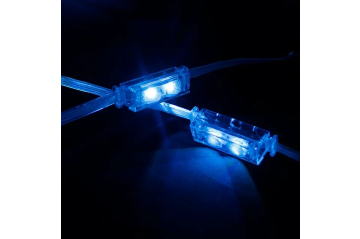
Lighting levels and spatial planning are key to achieving a well-lit commercial environment. Correct brightness and placement prevent visual discomfort and create a balanced, inviting atmosphere.
Assess the specific tasks performed in each area.
Offices may require 300–500 lux for general workstations, while retail displays may need 1000 lux for product highlights.
Restaurants often use lower levels (150–300 lux) to create intimate ambiance.
Ensure even distribution of ambient lighting to avoid dark spots.
Position task lighting strategically for work areas or service counters.
Use accent lighting to create focal points without overwhelming the space.
Select fixtures with diffusers or indirect lighting options.
Consider fixture placement and angles to minimize glare on screens, countertops, or display cases.
Align lighting with walls, ceilings, and architectural elements.
Use lighting to emphasize textures, materials, or design features.
Coordinate with natural daylight to optimize brightness and reduce energy consumption.
Proper planning of lighting levels and placement ensures that commercial spaces are functional, safe, and visually balanced.
Sustainable commercial lighting reduces energy consumption, lowers operational costs, and supports corporate responsibility initiatives.
LED Fixtures: Long lifespan, low energy use, and high-quality illumination.
Smart Controls: Dimmers, motion sensors, and automated schedules adjust lighting based on occupancy and daylight.
Daylight Integration: Maximizes natural light through windows or skylights to reduce dependence on artificial lighting.
Choose recyclable materials for lighting fixtures.
Implement energy-efficient systems compliant with LEED or ENERGY STAR standards.
Reduce heat generation to lower cooling costs.
Monitor energy consumption to maintain efficiency.
Energy-efficient commercial lighting benefits both the environment and a business’s bottom line, making sustainability a critical principle of lighting design.
Designing effective commercial lighting requires a deep understanding of its purpose, strategic layering, color quality, proper illumination levels, and energy efficiency. By implementing these principles, businesses can create spaces that are functional, visually appealing, and environmentally responsible.
From offices and retail stores to restaurants and hotels, high-quality commercial lighting enhances employee productivity, improves customer experiences, and strengthens brand identity. Investing in reliable, efficient lighting solutions, such as RainMin LED systems, ensures durability, flexibility, and superior performance.
For businesses seeking professional guidance and innovative commercial lighting solutions, RainMin provides a wide range of products tailored to meet diverse industry needs. Explore their offerings and connect with their expert team at www.rainmin.com to transform your commercial space today.
